
By PPH Foundation
When a mother begins bleeding heavily after childbirth, healthcare workers must recognise the danger, act quickly and work together to control the bleeding. In such emergencies, there may be little time to consult guidelines or decide who should perform each task. The team must be ready to respond. This raises an important question: can practising a postpartum haemorrhage (PPH) emergency before it happens improve the response when a real mother's life is at risk?
Simulation training offers healthcare workers an opportunity to practise these critical skills in a controlled environment without exposing patients to harm. Through realistic scenarios, doctors, nurses, midwives and other members of the maternity team can rehearse how to identify excessive bleeding, administer appropriate treatment, assess the mother's condition and coordinate an emergency response (Nelissen et al., 2017).
Prof Moses Obimbo, a Professor at the University of Nairobi and the Project Lead of the EndPPH Initiative, has emphasised the importance of this preparation. In an article published by PPH Foundation, he said: “Preparedness saves lives” (PPH Foundation, n.d.). He explained that practical experience in managing PPH emergencies can help reduce response times and improve decision-making when healthcare workers encounter similar situations in clinical practice.
The need for such training is supported by research. A study published in the Journal of Obstetrics and Gynaecology of Eastern and Central Africa examined capacity-building among Kenyan healthcare workers in PPH prevention and management. The researchers reported improved knowledge following training and highlighted the value of high-fidelity simulation drills in strengthening emergency preparedness. The study recommended scaling up in-service training to improve the management of PPH (Kihara et al., 2022).
Evidence from Tanzania also demonstrates the potential benefits. A prospective educational intervention study examined the effects of simulation-based obstetric training at a rural referral hospital. Following the introduction of training, researchers observed improvements in several practices, including the administration of uterotonic medicines and the management of PPH. The incidence of blood loss between 500 and 1,000 millilitres declined from 2.1% before training to 1.3% afterwards. However, the study design means the findings should be interpreted cautiously, as the association does not prove that training alone caused the reduction (Nelissen et al., 2017).
Simulation training is not limited to practising clinical procedures. It also allows teams to identify weaknesses in communication, leadership and the organisation of emergency care. During a simulated PPH emergency, participants can practise calling for help, assigning responsibilities, preparing medicines and equipment, arranging blood products and escalating care when bleeding continues. Reviewing the exercise afterwards helps teams identify delays and correct gaps before they affect patients. Research on multidisciplinary, scenario-based PPH training has also highlighted the value of realistic practice and debriefing for improving team preparedness (Egenberg et al., 2017).
The World Health Organization's consolidated guidelines, published in October 2025, recommend incorporating PPH treatment simulations into pre-service and in-service training programmes. The guidelines also emphasise the importance of adapting care to local needs and available resources (World Health Organization, 2025). Simulation does not have to depend on expensive technology. Lower-cost approaches can also provide opportunities for repeated practice when they are well designed and supported.
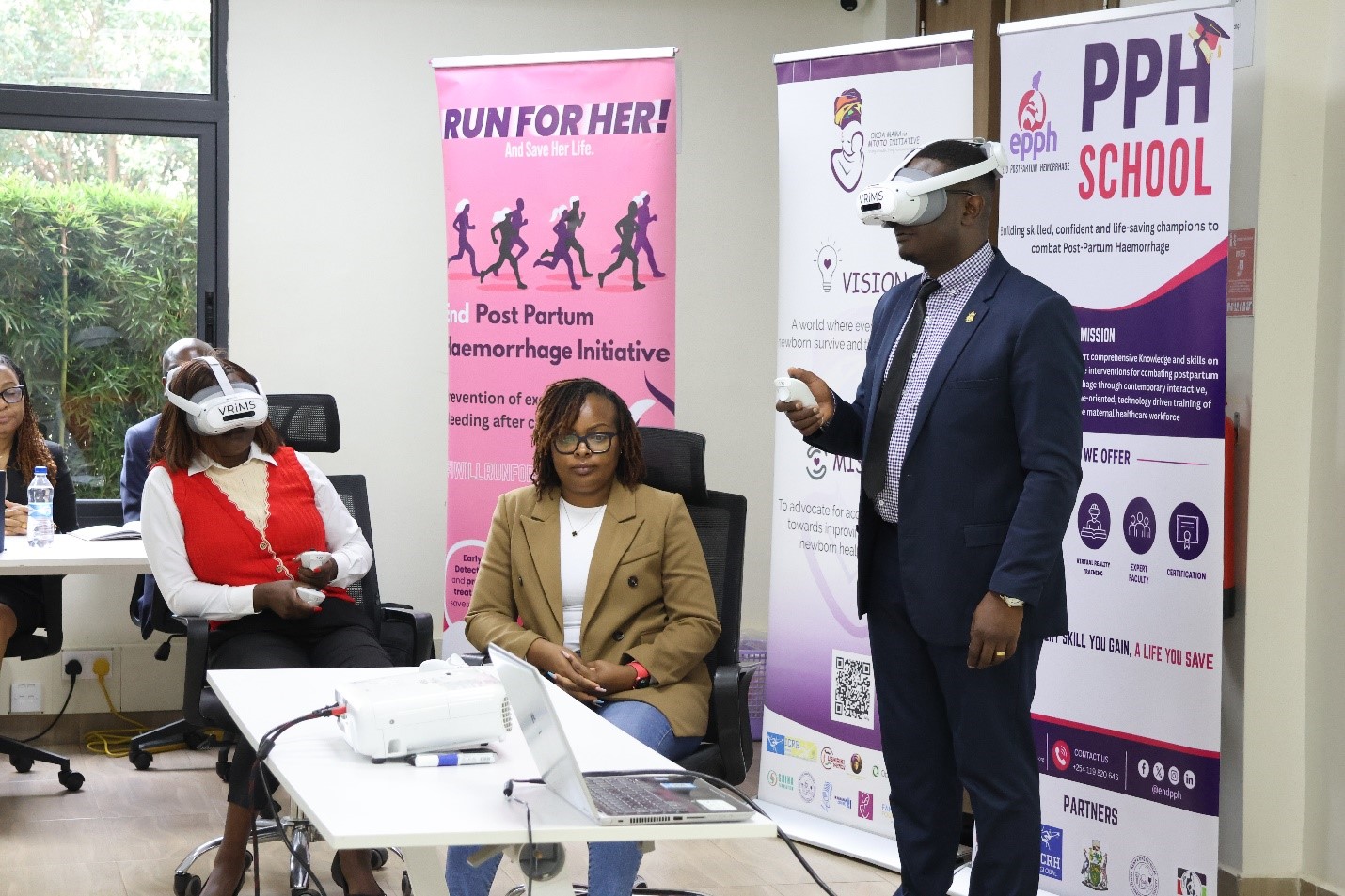
Prof Obimbo has also discussed the value of immersive technology in medical training: “When a doctor encounters a real emergency, they are not seeing it for the first time” (PPH Foundation, n.d.). The approach allows trainees to practise responses to realistic maternal emergencies repeatedly in a safe environment.
Nevertheless, simulation training is not a substitute for a properly equipped health facility. Skills must be supported by trained staff, essential medicines, blood supplies, functioning equipment, clear protocols and access to emergency procedures. Regular refresher sessions are also important because skills may deteriorate when rare emergencies are not encountered frequently. Facilities should assess whether training translates into better clinical practice and continue monitoring maternal outcomes (Nelissen et al., 2017; World Health Organization, 2025).
Although research supports improvements in knowledge, practical skills and team performance, the extent to which simulation training alone reduces maternal deaths requires further evaluation. Its value lies in preparing healthcare workers to recognise emergencies, respond systematically and work together when every minute matters (Nelissen et al., 2017; Egenberg et al., 2017).
For PPH, readiness cannot begin when the bleeding starts. Practising before an emergency gives healthcare teams an opportunity to identify weaknesses, strengthen coordination and build confidence in the actions required to protect mothers. Simulation training is therefore an important component of wider efforts to improve the quality of maternity care and prevent avoidable deaths (World Health Organization, 2025).
References
Egenberg, S., Masenga, G., Bru, L.E., Eggebø, T.M., Mushi, C. and Øian, P. (2017) ‘Impact of multi-professional, scenario-based training on postpartum hemorrhage in Tanzania: a quasi-experimental, pre- vs. post-intervention study’, BMC Pregnancy and Childbirth, 17, article 287. Available at: https://doi.org/10.1186/s12884-017-1478-2.
Kihara, A.B. et al. (2022) ‘Capacity building of Kenyan health workers in PPH prevention and management: Saving more parturient lives’, Journal of Obstetrics and Gynaecology of Eastern and Central Africa, 32(2), pp. 26–34. Available at: https://doi.org/10.59692/jogeca.v32i2.238.
Nelissen, E. et al. (2017) ‘Clinical performance and patient outcome after simulation-based training in prevention and management of postpartum haemorrhage: an educational intervention study in a low-resource setting’, BMC Pregnancy and Childbirth, 17, article 301. Available at: https://doi.org/10.1186/s12884-017-1481-7.
PPH Foundation (n.d.) ‘Training Tomorrow’s Health Workforce: Preparing for Postpartum Haemorrhage Emergencies’. Available at: https://www.endpphfoundation.org/pulse/training-tomorrows-health-workforce-preparing-for-postpartum-haemorrhage-emergencies.
World Health Organization (2025) Consolidated guidelines for the prevention, diagnosis and treatment of postpartum haemorrhage. Geneva: World Health Organization. Available at: https://www.who.int/publications/i/item/9789240115637.